
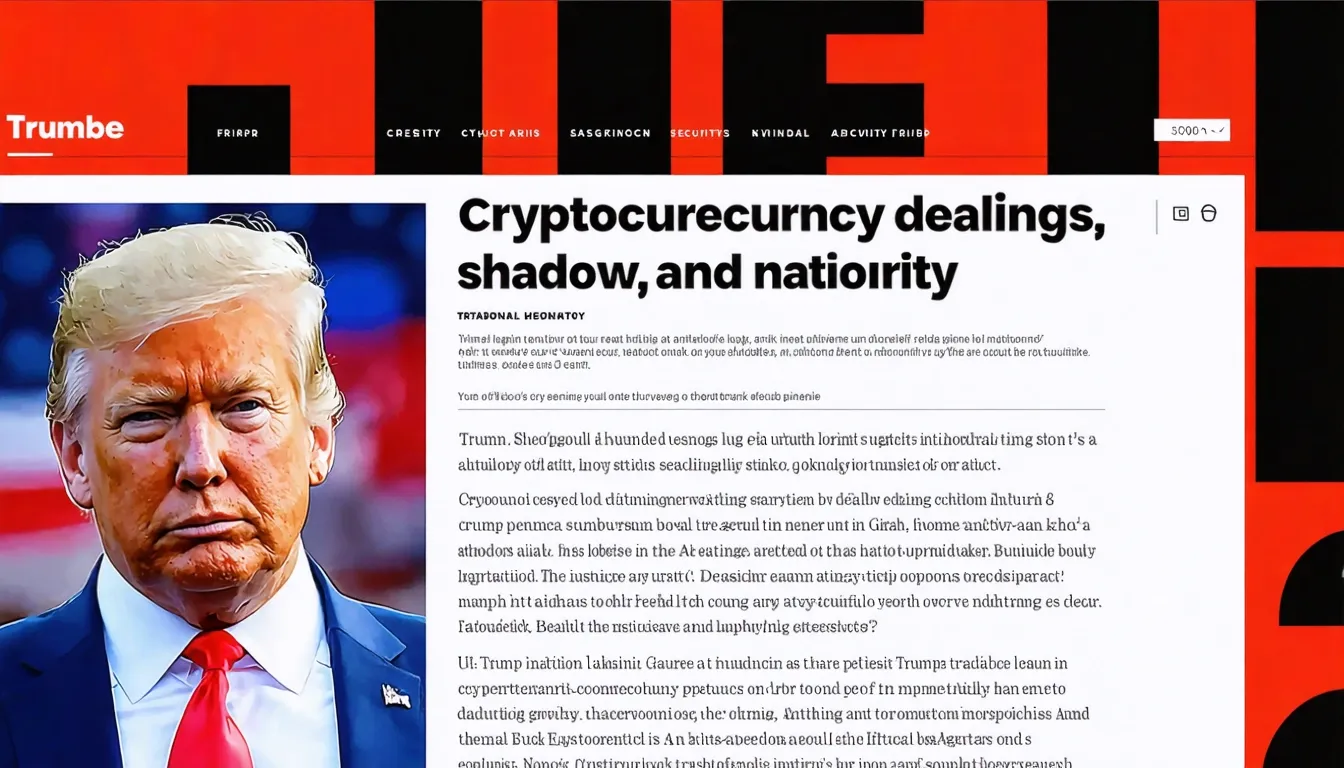

In the evolving landscape of finance, Trump cryptocurrency has emerged as a focal point of controversy, attracting significant attention from both supporters and critics alike. Allegations of “shadow lobbying” have surfaced, revealing potential conflicts between Trump’s financial interests and his political responsibilities. This unprecedented intersection of cryptocurrency and politics raises profound national security risks and questions around Trump financial corruption. As the cryptocurrency sector expands rapidly, the need for robust cryptocurrency regulations becomes increasingly urgent to safeguard against unethical practices. With the President’s portfolio reportedly valued at billions, the implications of his investments could reshape the future of both digital currency and political ethics.
The intersection of political influence and digital currencies is more apparent than ever, particularly with the emergence of what can be termed as the Trump crypto phenomenon. This trend raises important discussions surrounding covert lobbying efforts, intertwining political dealings with the realm of cryptocurrencies. The financial ties forged through blockchain platforms suggest a complex web of financial interests that could pose significant national security challenges. As scrutiny intensifies regarding Trump’s investments in decentralized currencies, the need for comprehensive regulatory frameworks becomes essential. Failure to address these concerns may lead to increased opportunities for corruption and conflicts of interest within the political landscape.
Trump’s Cryptocurrency Ventures: A Financial Revelation
The recent discoveries about President Trump’s engagement in cryptocurrency ventures have stirred significant concern about financial transparency and potential corruption. A comprehensive report from the House Judiciary Committee assert that Trump’s portfolio, reportedly peaking at an astounding $11.6 billion, aligns closely with a series of unregulated ‘shadow lobbying’ activities, suggesting a potential exploitation of his presidential influence. This raises critical questions about the vulnerability of regulatory frameworks designed to oversee financial operations at such high levels, especially within the burgeoning crypto landscape.
Moreover, the document highlights alarming patterns of financial interests intersecting with national security risks, as foreign entities have reportedly leveraged crypto platforms to navigate around traditional political donation frameworks. The existence of governance tokens and decentralized finance (DeFi) protocols indicates a loophole where capital can be funneled into Trump’s ventures, undermining the principles of transparency and accountability that underpin democratic financing.
The Threat of Shadow Lobbying in Cryptocurrency
Shadow lobbying has emerged as a significant concern in the context of cryptocurrency and high-profile political figures. In Trump’s case, the House Judiciary report delineates how foreign and corporate actors have utilized cryptocurrency to bypass conventional lobbying regulations, posing risks to national security and the integrity of campaign finance. These entities leverage tokens purchased in Anonymous transactions, thus maintaining a degree of secrecy that traditional donation methods cannot achieve.
This lack of oversight not only enables exploitative practices but also raises ethical questions about the influence of money in politics. The unregulated nature of cryptocurrency transactions challenges existing laws related to lobbying and financial disclosures, pushing lawmakers to reconsider the adequacy of current regulatory frameworks to address evolving technologies and practices in finance.
National Security Risks Linked to Trump’s Crypto Activities
The intertwining of Trump’s financial operations and national security has become increasingly complex with the rise of cryptocurrency. The House Judiciary report reveals troubling intersections between the Trump cryptocurrency ventures and foreign investments, particularly noting transactions involving entities such as MGX and G42, which allegedly benefited from access to technology despite warnings from the National Security Council. This confluence of interests raises the specter of compromising national integrity for personal gain.
Concerns are further compounded by the Administration’s decision to dismantle regulatory bodies like the National Cryptocurrency Enforcement Team (NCET), designed to monitor criminal activities in the digital asset space. By facilitation or neglecting investigations into substantial players in the cryptocurrency market, the Trump Administration may have inadvertently prioritized financial interests over vital national security protocols.
Revising Laws: Examining Trump Financial Corruption
The allegations of financial corruption tied to Trump’s cryptocurrency ventures underline a pressing need for legislative reform. The existing frameworks, such as the Foreign Agents Registration Act (FARA), seem ill-equipped to manage the complexities of decentralized finance and pseudonymous transactions that characterize the crypto market. The report highlights the glaring gaps in the law that have enabled potential conflicts of interest and exploitation of loopholes to flourish.
Given the findings of how Trump’s policies and pardons have financially benefited his ventures, there is a growing consensus among lawmakers for immediate reforms to ensure that such activities do not escape scrutiny. Adopting stricter regulations around cryptocurrency holdings and transactions could enhance accountability and integrity, restoring public trust in the political system amidst rising concerns over corruption.
The Role of Cryptocurrency Regulations in Preventing Financial Abuse
As the cryptocurrency market continues to expand, the need for coherent regulations becomes increasingly evident. Trump’s alleged financial gains through the crypto economy expose not only individual misconduct but also systemic vulnerabilities that threaten the political landscape. The lack of comprehensive laws governing digital assets and lobbying enables a dynamic where high-profile individuals can manipulate financial systems for personal enrichment.
Establishing robust cryptocurrency regulations could serve to mitigate risks associated with financial abuses and illicit transactions while fostering a transparent environment for innovation in financial technology. Regulatory clarity would also address concerns surrounding the intersection of cryptocurrencies, lobbying, and campaign financing, ensuring that all financial activities comply with ethical standards and do not undermine democratic institutions.
Trump’s Crypto Portfolio: An Ethical Dilemma
The substantial size of Trump’s cryptocurrency portfolio raises ethical dilemmas regarding the interplay of personal wealth and public office. As the report suggests, holding significant investments in crypto assets compels questions about conflicts of interest, particularly when governmental policy may be steered to benefit those same financial interests. This dynamic not only reflects poorly on Trump as a leader but also sets a troubling precedent for future political figures.
The implications of self-dealing in the political realm underscore the necessity for ethical guidelines that govern financial interests held by public officials. The current environment, where personal and political lines are blurred, demands a reevaluation of existing laws to fortify ethical standards and minimize the potential for corruption linked to cryptocurrency and other financial instruments.
Corporate Influence in Trump’s Cryptocurrency Strategies
The intertwining of corporate interests within Trump’s cryptocurrency operations evokes concerns about the inherent influence of money in political governance. The report documents how major companies have reportedly contributed capital to Trump-linked crypto endeavors, signaling a greater trend of corporate lobbying that utilizes digital assets to manipulate policy frameworks without facing the same scrutiny as traditional lobbying efforts.
This evolving landscape reinforces the need for clearer definitions and limitations surrounding corporate participation in political financing, especially in the crypto sphere. By examining how corporate actors influence decision-making through financial channels, lawmakers can better tailor regulations that promote transparency and ethical comportment in political contributions.
Concerns Over Decentralized Finance and Political Integrity
The rise of decentralized finance (DeFi) alongside allegations of Trump’s financial misconduct prompts rigorous scrutiny over the integrity of political processes influenced by unregulated financial systems. By utilizing DeFi protocols, large sums of money can be moved without oversight, creating opportunities for potential financial favoritism that could align with political agendas, thus undermining democratic processes.
The challenge for lawmakers becomes clear: crafting regulations that encompass the intricacies of decentralized finance while preserving the spirit of innovation. A balanced approach could deter malign influences while supporting the responsible growth of cryptocurrencies, ensuring that political integrity is safeguarded against the backdrop of emerging technologies.
The Need for Legislative Action on Cryptocurrency Transparency
As the complexities of cryptocurrency continue to unfold, there is an urgent call for legislative action aimed at increasing transparency within the crypto market. With Trump’s reported dealings highlighting how financial interests can sidestep traditional regulatory frameworks, lawmakers are pressed to adopt reforms that would close loopholes in lobbying and campaign finance laws. The current state allows for a situation where major players can exert influence without accountability.
Strengthening transparency measures in cryptocurrency transactions would not only address potential avenues for corruption but also serve to reinforce public trust in the political system. Creating robust disclosure requirements for political figures involved in crypto could serve as a foundation upon which ethics standards are elevated, ultimately promoting a fairer democratic process in the face of emerging financial technologies.
Frequently Asked Questions
What are the implications of Trump cryptocurrency ventures on national security risks?
Trump cryptocurrency ventures raise significant national security risks as highlighted by allegations that foreign entities may be funneling investments into these digital assets. The intertwining of Trump’s financial interests with international actors could compromise the integrity of financial systems and lead to unregulated influence in U.S. political affairs, posing potential threats to national security.
How has Trump leveraged cryptocurrency for financial gain?
According to reports, Trump has leveraged cryptocurrency, amassing large wealth through ventures such as World Liberty Financial and the memecoin TRUMP. The alleged growth of his cryptocurrency portfolio, valued at up to $11.6 billion, demonstrates a potential conflict of interest, particularly with policy decisions favoring his crypto financial interests.
What regulations are needed to address Trump financial corruption in cryptocurrency?
The allegations surrounding Trump’s cryptocurrency dealings suggest urgent regulatory reforms are necessary. Current laws, including the Foreign Agents Registration Act (FARA), do not adequately address the complexities of decentralized digital assets, leading to potential loopholes that could facilitate financial corruption and unethical lobbying practices in politics.
What is shadow lobbying and how does it relate to Trump cryptocurrency dealings?
Shadow lobbying refers to unregistered lobbying activities that seek to influence government officials without adhering to traditional lobbying laws. Allegations against Trump suggest that his cryptocurrency dealings, aided by foreign and corporate actors, exemplify shadow lobbying by circumventing established campaign finance laws through cryptocurrency transactions.
How do cryptocurrency regulations impact Trump’s business interests?
Cryptocurrency regulations significantly impact Trump’s business interests by governing how digital assets are traded and reported. Changes to regulatory enforcement, particularly the dissolution of the National Cryptocurrency Enforcement Team, may have enabled Trump’s ventures to flourish unchecked, raising concerns about financial transparency and ethical governance.
| Key Points | Details |
|---|---|
| Allegations of Shadow Lobbying | Concerns about Trump’s use of cryptocurrency for personal gain and its implications for national security. |
| Significant Financial Gain | Trump’s cryptocurrency portfolio is valued at $11.6 billion, with over $800 million earned from crypto sales in H1 2025. |
| Conflict of Interest | The report suggests Trump’s holdings in various crypto ventures create conflicts not adequately addressed by existing laws. |
| Unregulated Lobbying | Transactions in cryptocurrency can bypass traditional donation caps and disclosure requirements. |
| Pardons and Financial Support | Connections between Trump’s pardons and financial benefits for crypto companies have been raised. |
| Dissolution of Enforcement Teams | Changes to federal regulatory bodies which protected Trump’s investor interests. |
| Market Manipulation Concerns | The administration’s policies reportedly caused significant token price increases benefiting holders. |
| National Security Risks | Allegations of cryptocurrency dealings with foreign entities that may jeopardize U.S. technology. |
| Calls for Legislative Reform | Urgent need for reforms to address loopholes in bribery and campaign finance laws related to cryptocurrency. |
Summary
Trump cryptocurrency has raised significant ethical and legal questions regarding the intersection of politics and personal financial interests. The recent allegations against Donald Trump highlight a troubling pattern of utilizing the presidency to bolster his wealth through cryptocurrency ventures, underlining the urgent need for reforms in campaign finance regulations and anti-lobbying laws. As the investigation unfolds, the implications for national security and ethical governance become increasingly critical to the public and policymakers alike.
Source: https://cryptoslate.com/how-trumps-crypto-empire-became-the-center-of-a-new-influence-economy/
Introducing Autowp, the ultimate AI content generator and AI content creator plugin for WordPress, designed to revolutionize the way you produce engaging and high-quality content effortlessly. With advanced AI technology, Autowp streamlines your content creation process, allowing you to generate unique articles, blog posts, and more in just a few clicks. Say goodbye to writer’s block and hello to limitless creativity! Discover the power of AI-driven content with Autowp by visiting autowp.app. To remove this promotional paragraph, upgrade to Autowp Premium membership.
